 HopBase
Blog · Field Notes
Nano Banana 2.1 Is Live on HopBase: From $0.0336 per Image, About Half the Price of Nano Banana 2, Native 4K
Google's latest efficient image generation and editing model, Nano Banana 2.1, is live on HopBase: $0.0336 per 1K image, about half of Nano Banana 2, with native 4K and 10 aspect ratios. Includes a price comparison, sizes and latency, curl / Python SDK / Chat Completions examples and an FAQ.
18 min read→How to Reconcile LLM API Usage and Allocate Costs by Department: A Reproducible Method (2026)
Reconciling an LLM API bill takes three layers of data you can recompute yourself: the actual charge returned in the async task query (usage.cost), itemised CSV records you can verify row by row, and per-key and per-department allocation. Includes a curl check and a vendor-neutral reconciliation checklist.
24 min read→Claude Opus 5.5 and GPT-6 Sol / Luna Are Live on HopBase: List Prices, Cost per Request and How to Choose
Claude Opus 5.5 ($4 / $20, 20% below Opus 5), GPT-6 Sol ($2 / $10) and GPT-6 Luna ($0.1 / $0.5) are live on HopBase at official list price. Covers the published price table, what the same request costs on each model, task-based selection advice and a three-minute integration example.
15 min read→
Midjourney v8.2 is live on HopBase — every job returns 4 images, from $0.0067 each
Midjourney v8.2 (midjourney-v8-2) is now on HopBase, submitted via the OpenAI-compatible POST /v1/images/generations and polled with GET /v1/video/tasks/{task_id}. Every job returns a fixed 4 images, billed per image at $0.0067 (1K) or $0.0108 (2K). This post covers the async flow, pricing, the --ar size table and which parameters v8.2 rejects.
13 min read→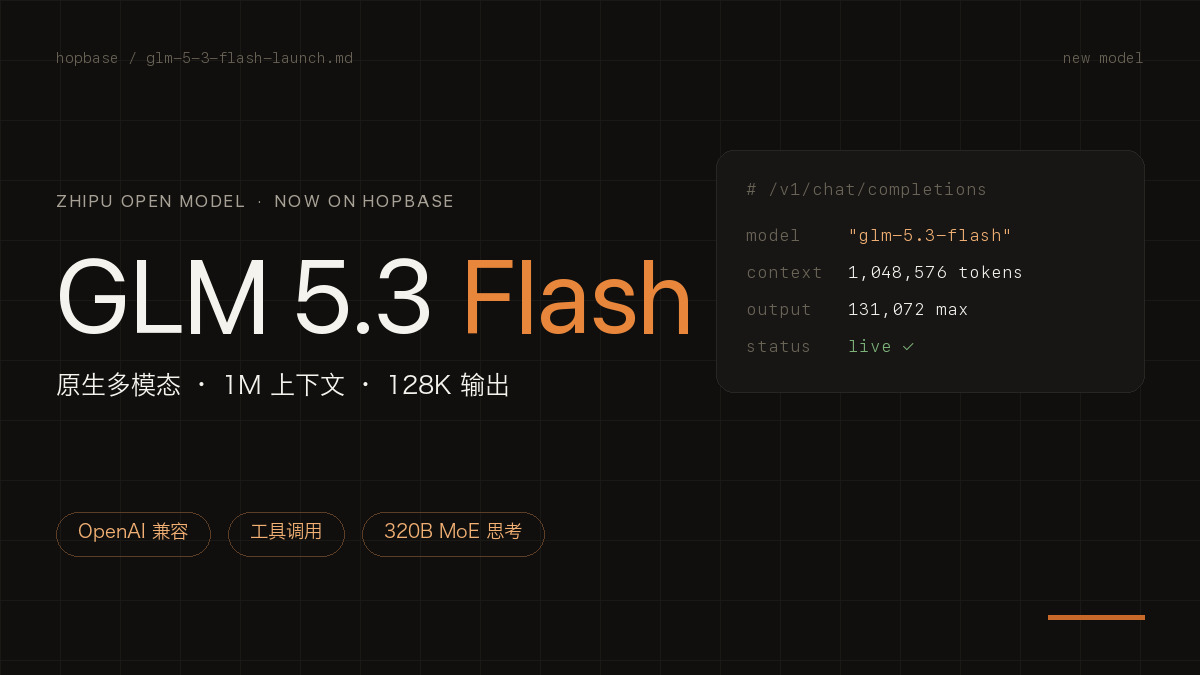
GLM-5.3-Flash Is Live on HopBase: 320B Natively Multimodal at the CNY 0.80 / 2.80 List Price
Zhipu GLM-5.3-Flash is live on HopBase: call it over the OpenAI-compatible endpoint, 320B MoE with native multimodal input, a 1M context window and up to 128K output tokens, billed at Zhipu's official list price (CNY 0.80 input / 0.23 cached / 2.80 output per million tokens). Covers pricing, parameter guidance, tool calling and a three-minute integration example.
14 min read→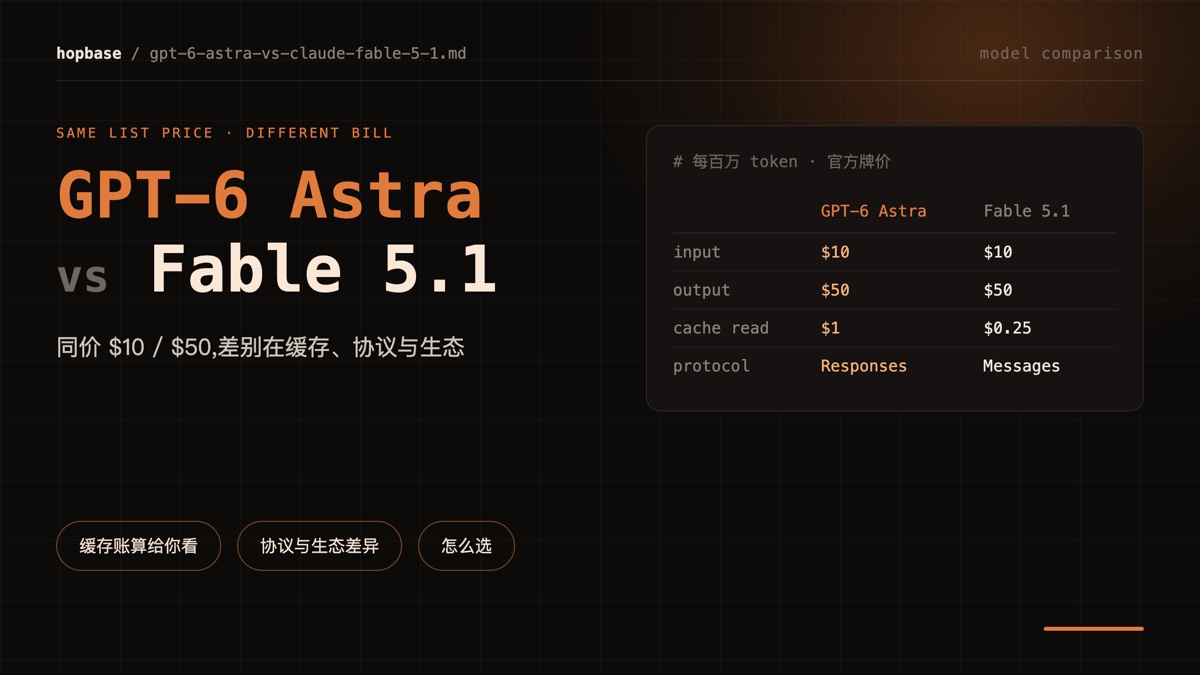
GPT-6 Astra vs Claude Fable 5.1: Same $10 / $50 List Price, Different Bill
Both flagships list at exactly $10 input and $50 output per million tokens. The real differences are three: the cache pricing model (with a break-even point you can compute), the protocol and tooling ecosystem, and how much of the spec each vendor has actually published. Line-by-line comparison plus a selection checklist.
18 min read→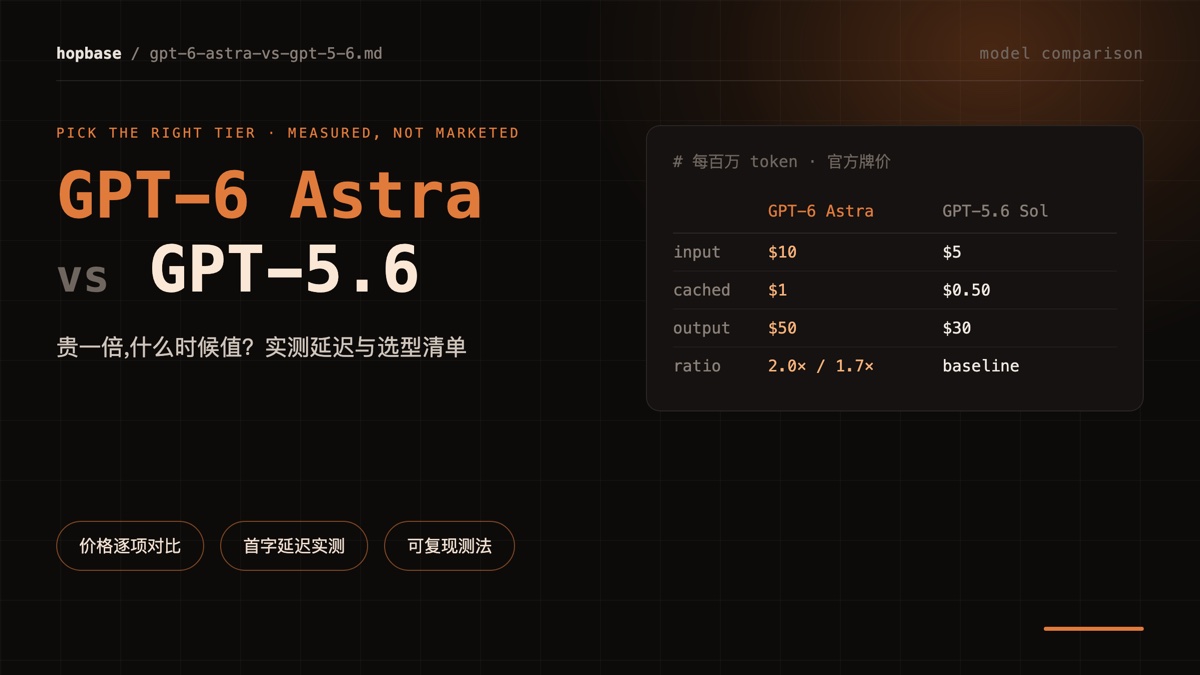
GPT-6 Astra vs GPT-5.6: What the 2x Price Actually Buys You
GPT-6 Astra costs 2x on input and about 1.67x on output, yet streaming first-token latency lands in the same range as GPT-5.6. This post gives the line-by-line price comparison, per-call cost math for two real workloads, a reproducible TTFT measurement with curl, and a three-step checklist for choosing by failure cost rather than version number.
19 min read→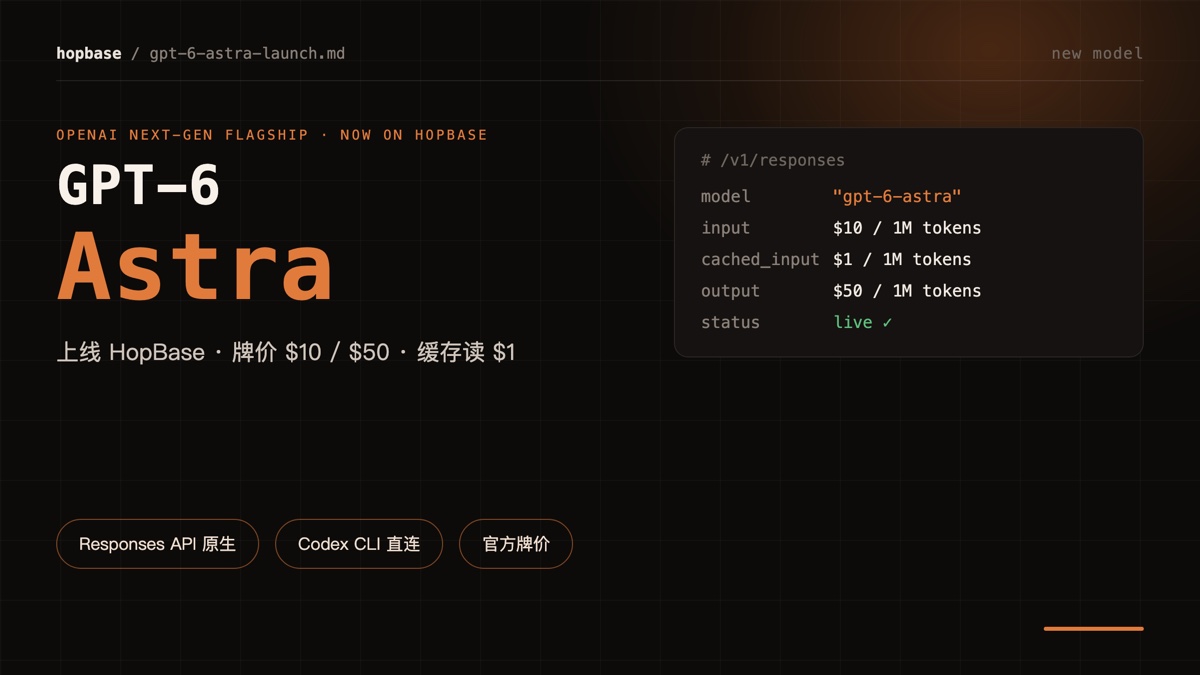
GPT-6 Astra Is Live on HopBase: OpenAI's Next-Generation Flagship at $10 / $50 List Price
OpenAI's next-generation flagship GPT-6 Astra is now live on HopBase: native on both Responses and Chat Completions, works with Codex CLI as-is, billed at the $10 / $50 list price with $1 cached reads. Covers available groups, price comparison, a streaming recommendation and a three-minute integration example.
10 min read→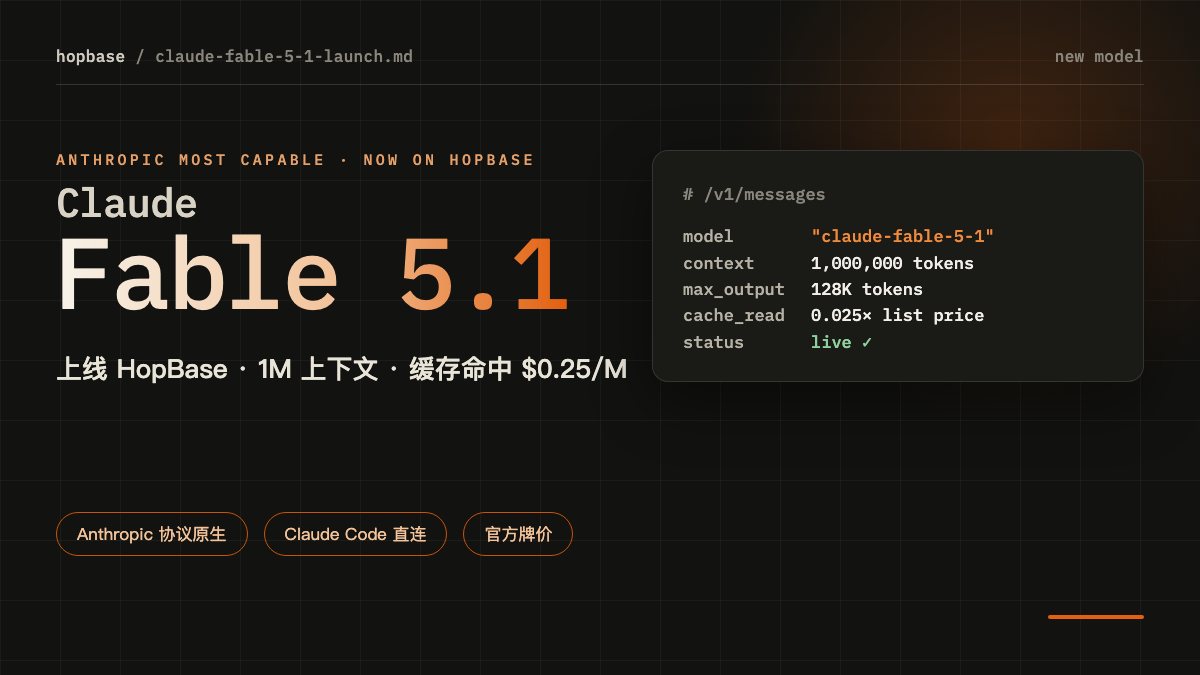
Claude Fable 5.1 Is Live on HopBase: Anthropic's Most Capable Model, 1M Context, Cache Hits at $0.25/M
Anthropic's newest flagship, Claude Fable 5.1, is now available on HopBase: 1M context, 128K output, billed at the official list price of $10 / $50 with cache hits from $0.25/M. Specs, pricing, what changed from Fable 5, and a three-minute quickstart inside.
6 min read→How to Benchmark LLM API Performance: TTFT, Streaming Stability, and a Reproducible Method (2026)
High performance is the most claimed and least verified phrase in the LLM API market. Three metrics actually measure it - TTFT P95 distribution, stream truncation rate, and cache-hit amplification - and here is a test you can run yourself, starting from one curl command.
12 min read→Enterprise AI API Security Checklist (2026): Key Governance, Zero Content Retention, Audit Trails, Vendor Verification
Evaluating the security of an LLM API vendor comes down to four layers: key governance, the data path, audit and reconciliation, and vendor verifiability. Here is a checklist where every item includes how to actually verify it - usable against any vendor, including us.
13 min read→How an LLM API Gateway Survives High Concurrency: Multi-Upstream Scheduling, Failover, and Cache Affinity (2026)
High concurrency for LLM APIs is a scheduling problem, not a throughput problem: upstream quotas are scarce, upstream errors are routine, and every request is a long-lived stream. Here is how an enterprise gateway actually handles it, plus a reproducible checklist to verify any vendor.
14 min read→How to Use DeepSeek Harness (dsh) with One Gateway Key: DeepSeek, GLM, Grok and Claude (2026)
DeepSeek's official agent runtime dsh passed 100k GitHub stars in two days. A three-minute HopBase setup: settings.yaml, protocol cheat sheet, verified function calling and streaming, quick troubleshooting.
6 min read→How to Run Claude Code for a Team: Access Paths and a Verifiable Gateway Checklist (2026)
Getting Claude Code / Codex into production as a team: three access paths compared, plus a 7-point gateway checklist you can verify yourself — protocol fidelity, model authenticity, failover, billing transparency, per-member keys.
8 min read→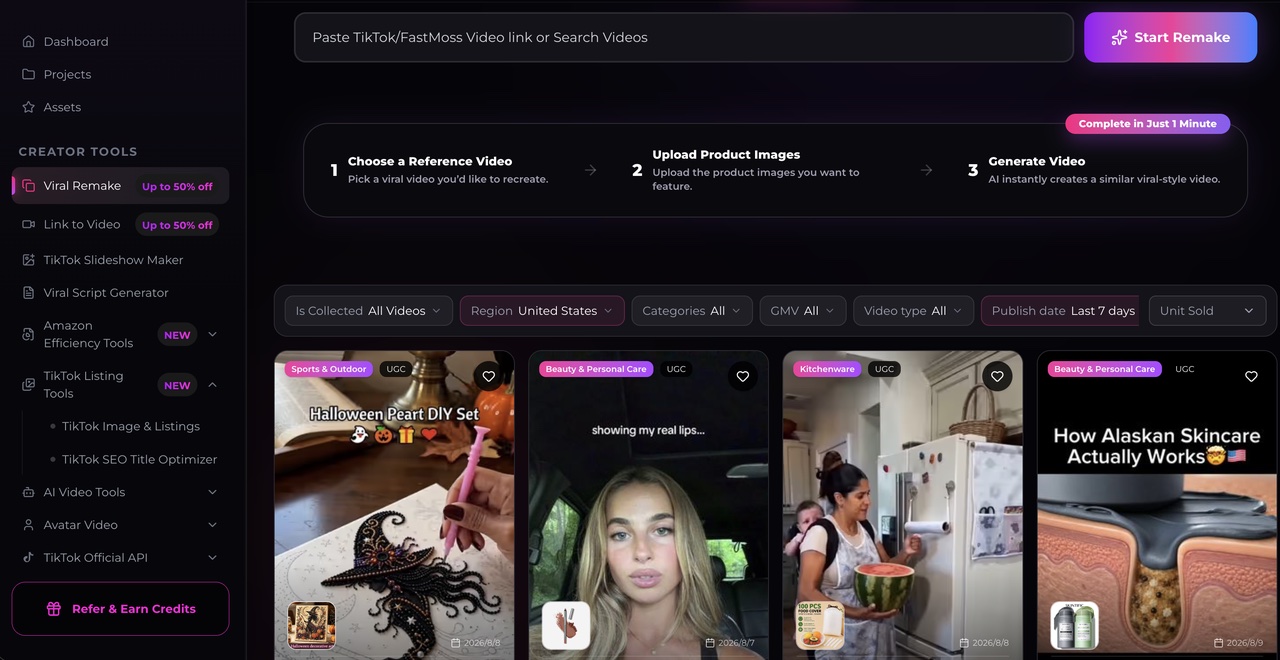
How to Use Oumomo: Six AI Tools from Viral Remake to Official TikTok Publishing (with the FastMoss Workflow)
A hands-on guide to Oumomo's six AI tools — viral video remake, URL to video, TikTok listing images, official API publishing, script generator and Amazon SEO — plus the FastMoss research workflow and partner discount.
8 min read→
MiniMax Hailuo H3 Is Live on HopBase: Text, Image & Reference to Video with Native Audio, 15% Off List
MiniMax's new multimodal video model H3 is live: 4-15s clips at 768P/2K with native stereo audio and TTS across 11 languages, at 85% of the official list price.
5 min read→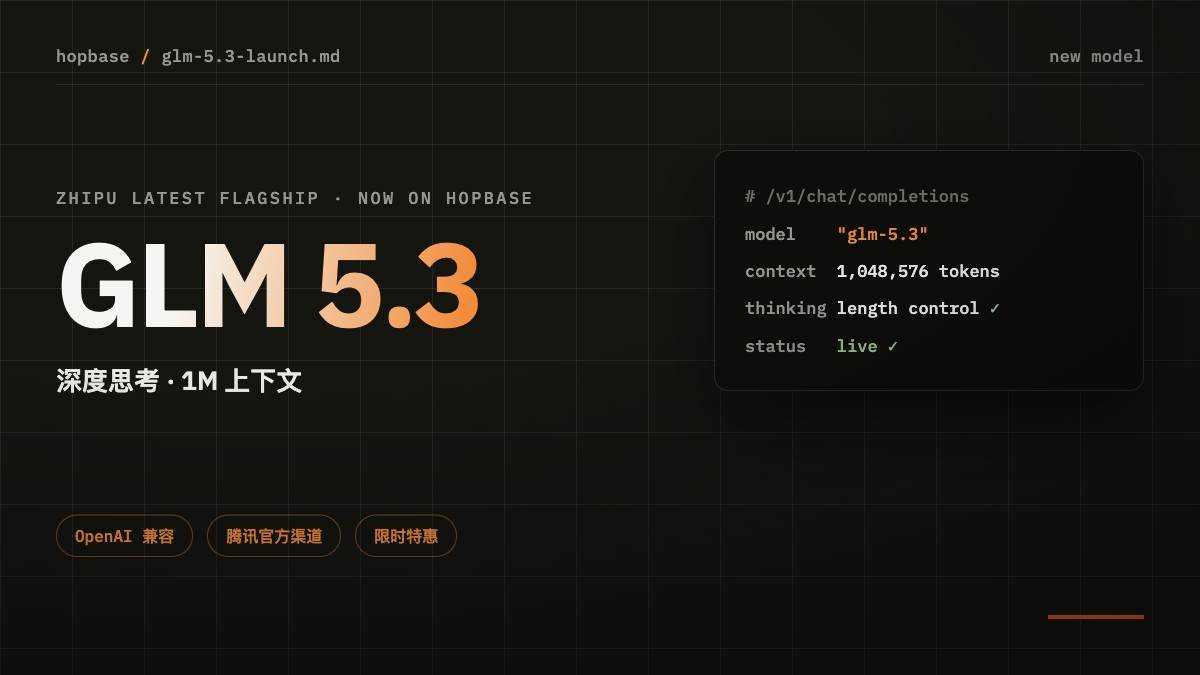
GLM 5.3 Is Live on HopBase: 1M Context, Thinking-Length Control, ~15% Off List
Zhipu's latest flagship GLM 5.3 is now available on HopBase via the Tencent official channel: 1M context, thinking-length control, base price aligned with the official list and a limited-time ~15% discount. Specs, pricing, and a three-minute quickstart inside.
4 min read→Kling Digital Human API: Turn a Photo and an Audio Clip into a Talking-Head Video
Two pipelines explained: kling-avatar generates a talking-head video from photos plus audio; kling-lip-sync re-voices existing footage. Full curl walkthrough, billing rules, and 25% off list.
11 min read→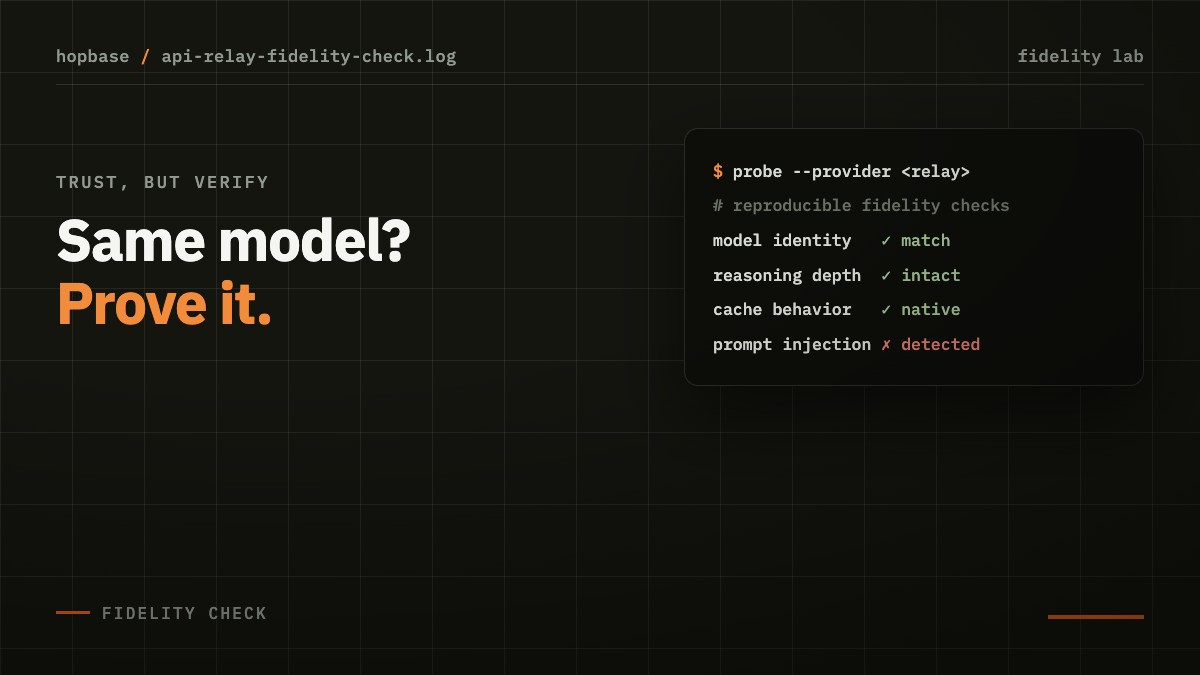
How to Verify Your LLM API Provider Isn't Swapping Models: A Reproducible Fidelity Test
Asking a model "who are you" proves nothing. Verify any API channel with cost-structure checks, model-family fingerprints, and blind quality benchmarks — including ours.
11 min read→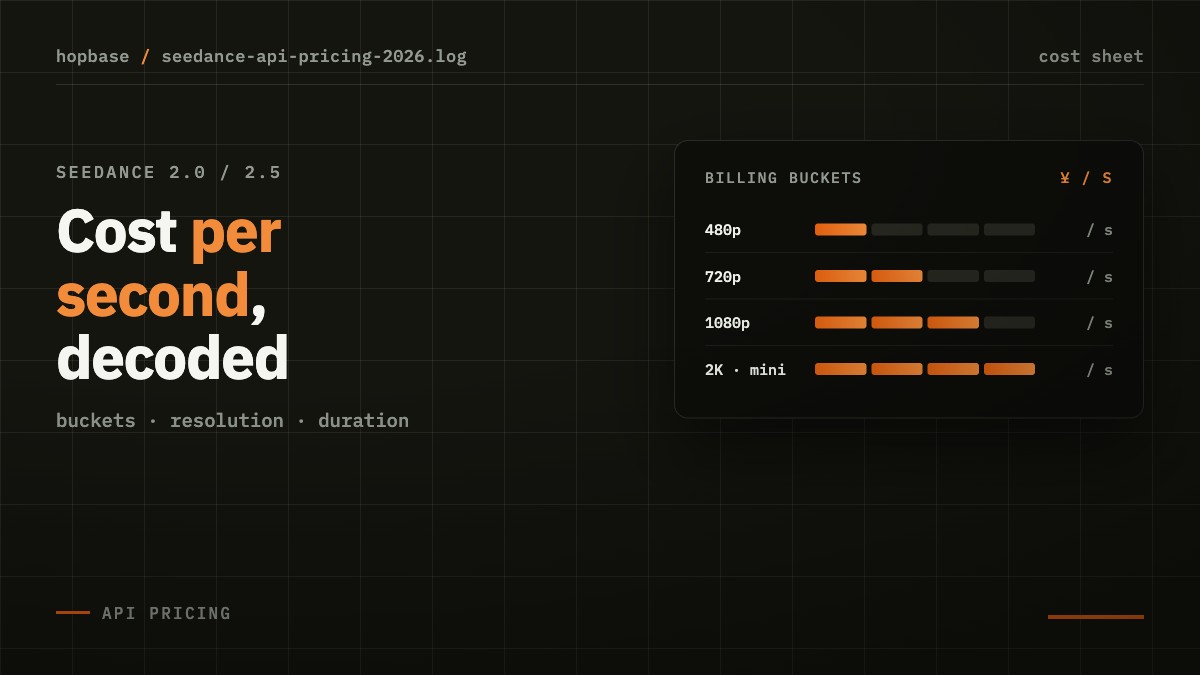
Seedance API Pricing Explained (2026): Cost per Second, 2.0 vs 2.5, and How to Pay Less
Seedance bills by video token, not per clip. Here is every tier's rate, what a 15-second clip actually costs, and which tier to pick for testing, ad variants, and delivery.
7 min read→
Tencent WorkBuddy Enterprise Pricing (2026): Plans, Discounts, and Onboarding
Flagship at ¥198 and Dedicated at ¥316 per user per month, both with 2,000 monthly Credits — and how partner-channel pricing takes 20% off the identical official product.
8 min read→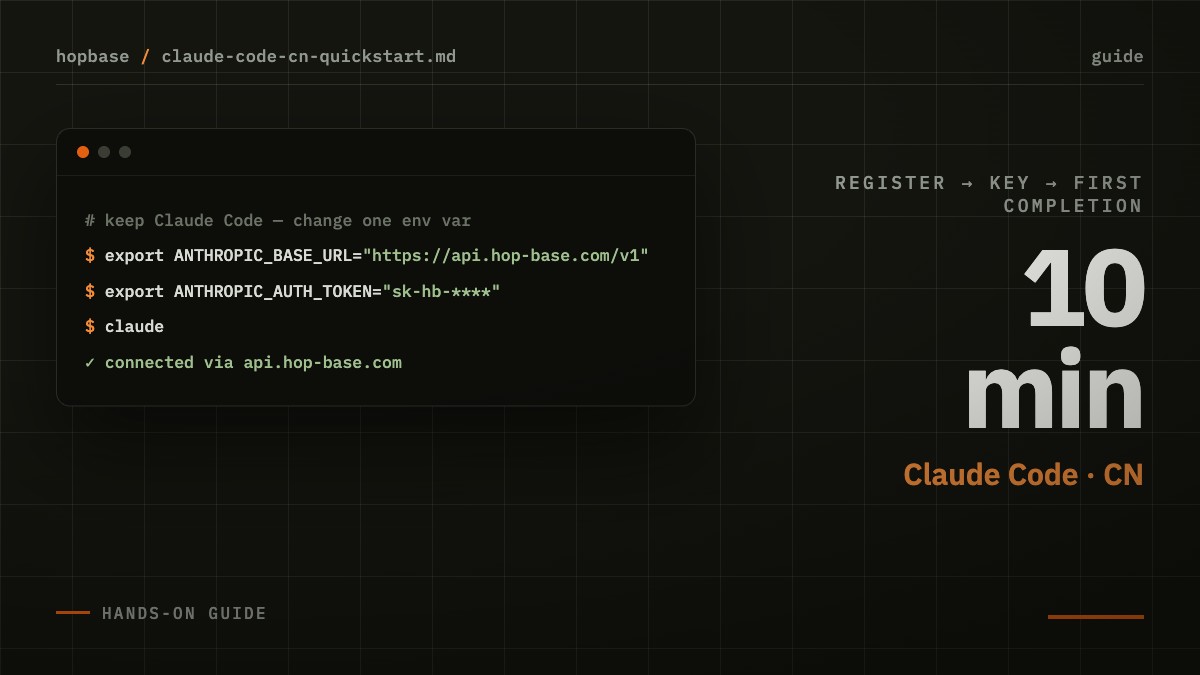
Claude Code Setup in China: Complete Guide — from Registration to First Autocompletion in 10 Minutes
No VPN needed, no code changes — just two environment variables to connect Claude Code to a stable gateway. This guide covers registration, getting your API key, configuration, and verification, plus the three most common pitfalls.
7 min read→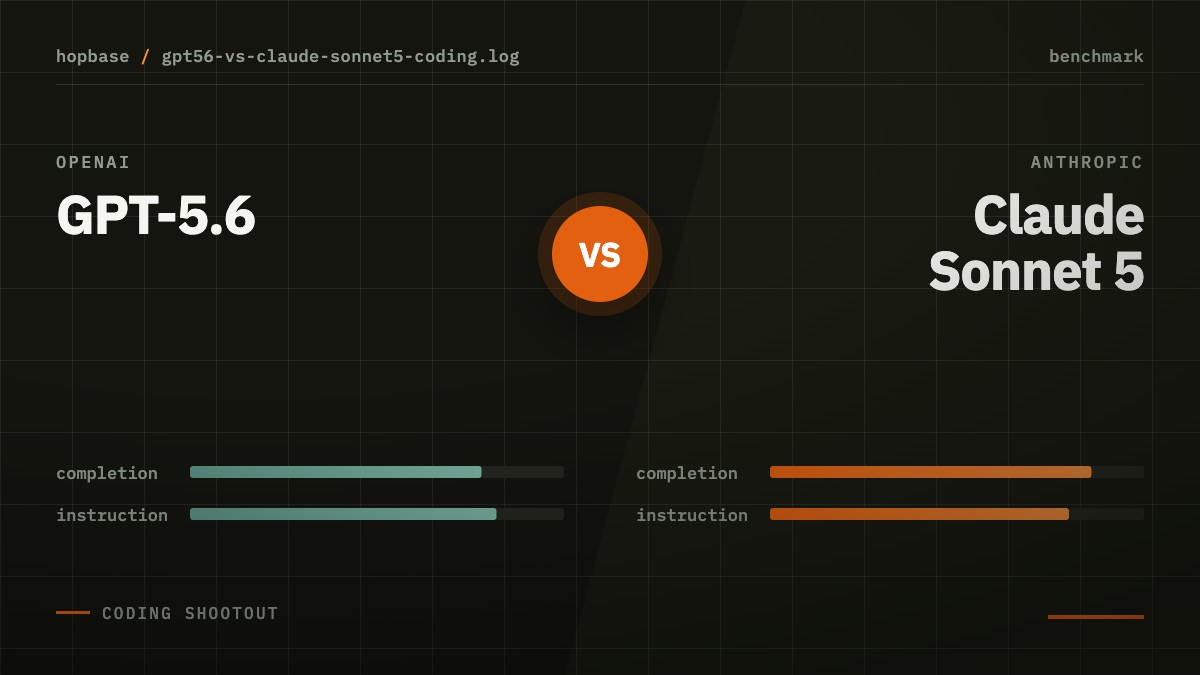
GPT-5.6 vs Claude Sonnet 5 for Chinese Project Code: Which Should You Choose?
We route both flagship coding models at scale through our production gateway. Here's what we actually observe about completion quality, instruction following, and token consumption — plus our real-world selection advice.
6 min read→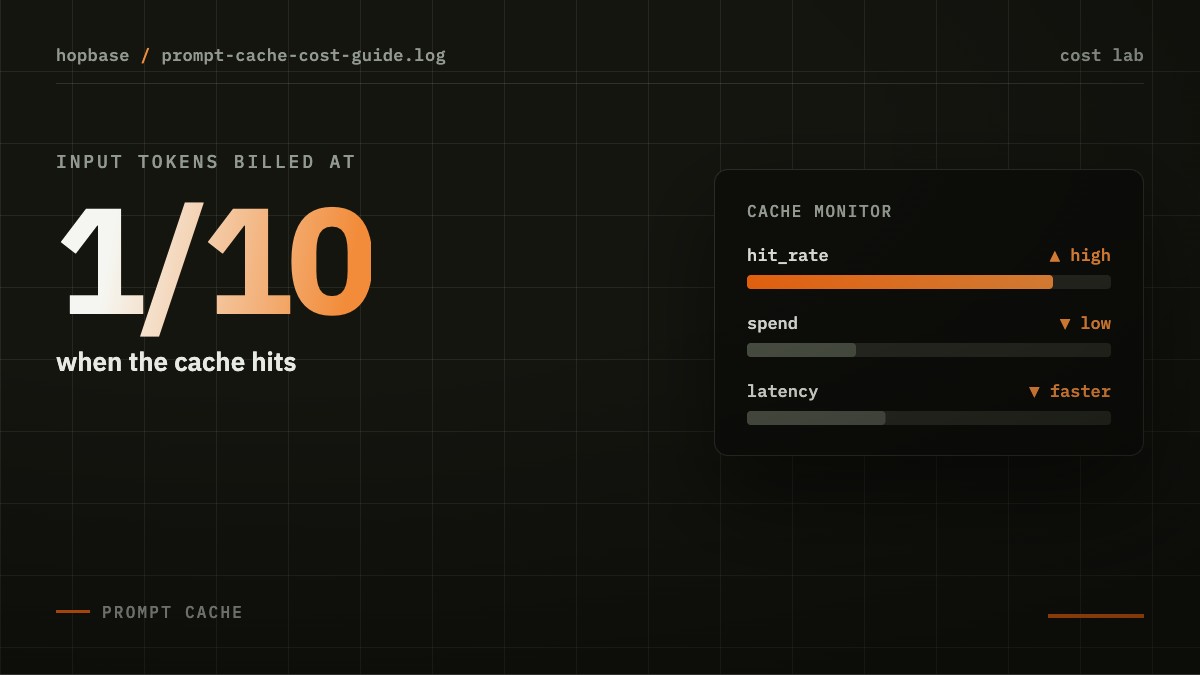
How Much Can Prompt Cache Save You? Mechanics, Real-World Hit Rates, and Three Writing Techniques
Cache hit rate determines your bill. Here's how prompt caching actually works, the real hit rates we see in conversational tools, and three prompt organization techniques that can double your cache efficiency.
6 min read→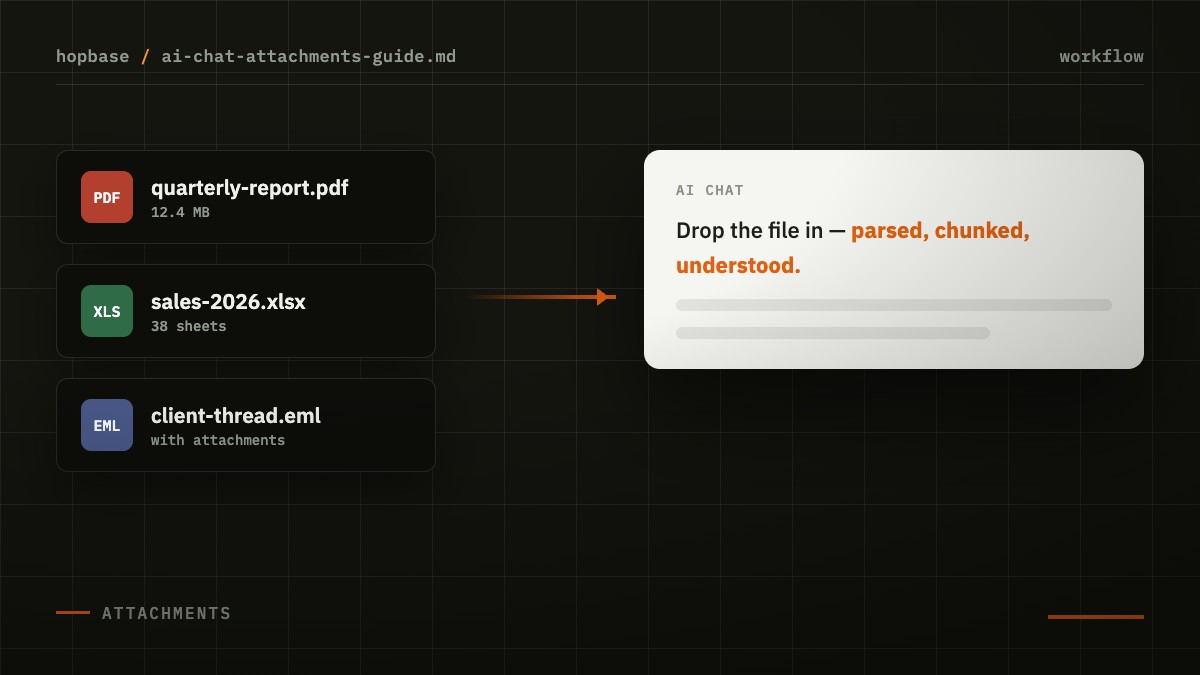
Drop PDFs and Excel Files Straight Into Your Model: The Right Way to Use Attachments in AI Chat
Spreadsheets, scanned PDFs, raw email, web links — which ones go straight to the model, and which need preprocessing? Here's everything about AI Chat's attachment capabilities and how to use them effectively.
6 min read→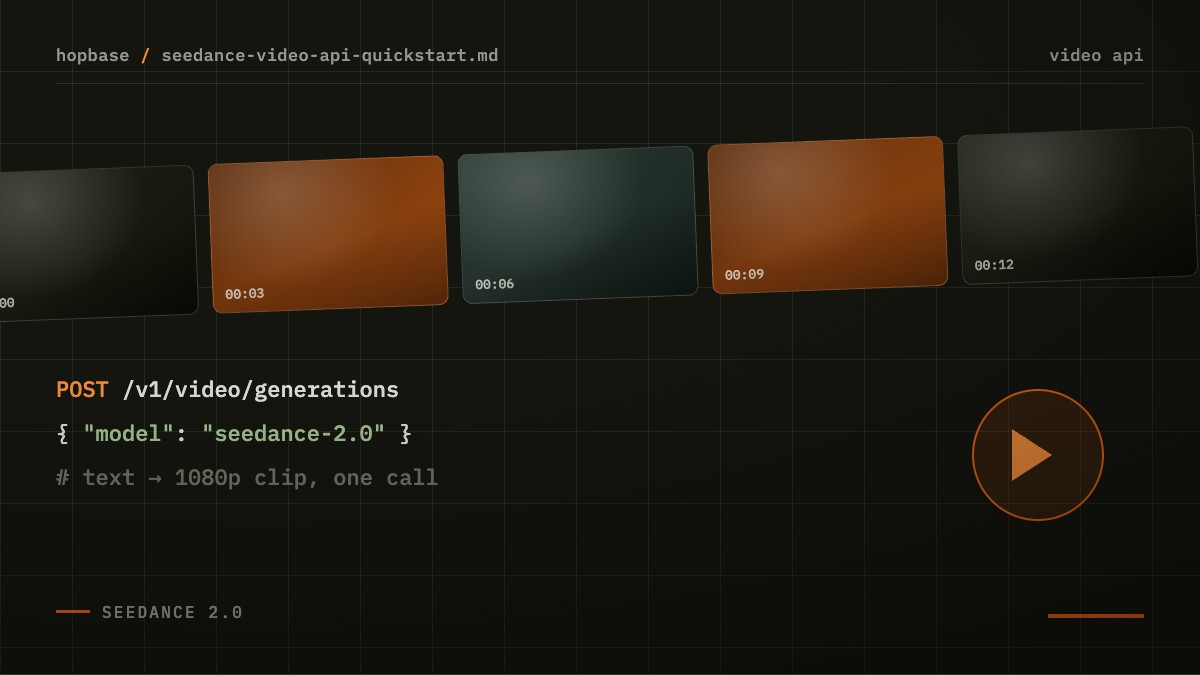
Seedance 2.0 Video Generation API: Quick Start Guide
From submitting your job to downloading the final video: request parameters, task polling, video retrieval, and how resolution, duration, and pricing line up.
5 min read→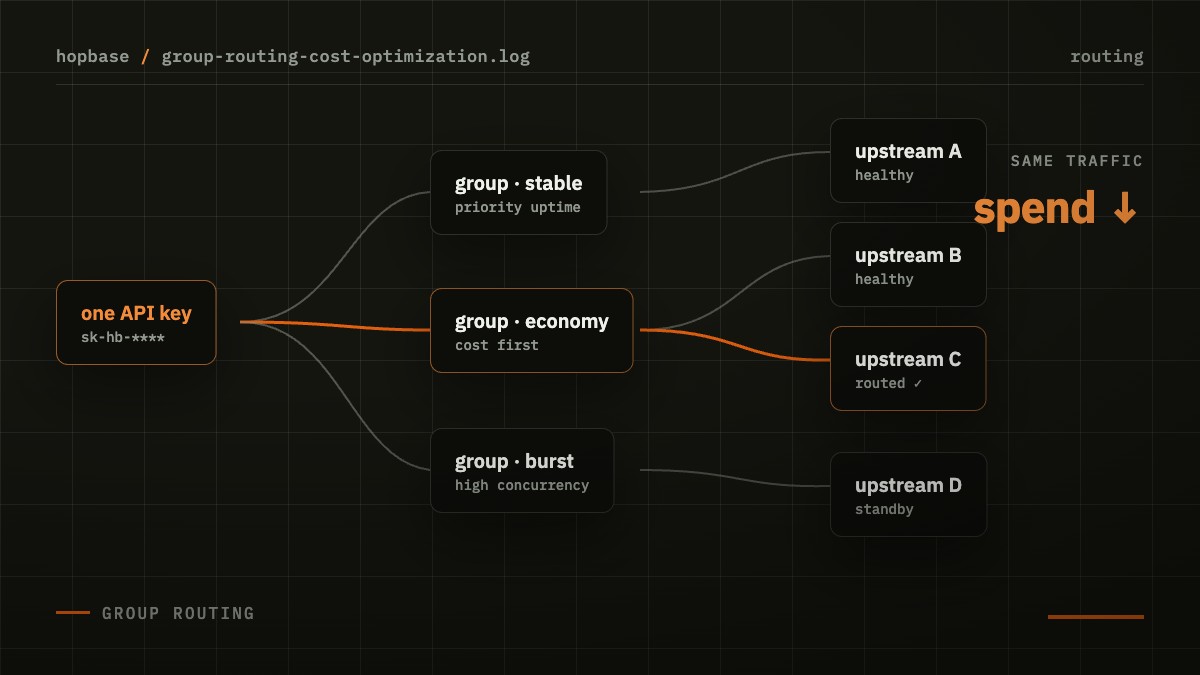
Routing Multiple Upstreams with One API Key: Group-Based Routing Can Cut Costs in Half
Choose your tier per task: stable group during peak hours, economy group for batch jobs. Here's how groups, multipliers, and automatic failover work together, plus cost-optimized setups for three typical user profiles.
6 min read→